Tuesday, February 24, 2015

The Creative Class


"The key to economic growth lies not just in the ability to attract the creative class, but to translate that underlying advantage into creative economic outcomes in the form of new ideas, new high-tech businesses and regional growth. to better gauge these capabilities I developed a new measure called the Creativity Index. The Creativity Index is a mix of four equally weighted factors: the creative class share the workforce; high-tech industry, using the Milken Institute's widely accepted Tech Pole Index, which I refer to as the High-Tech index; innovation, measured as patents per capita; and diversity, measured by the Gay Index, a reasonable proxy for an area's openness to different kinds of peoples and ideas. This composite indicator is a better measure of a region's underlying creative capabilites than the simple measure of the creative class, because it reflects the joint effects of its concentration and of innovative economic outcomes. The Creativity Index is thus my baseline indicator of a region's overall standing in the creative economy and I offer it as a barometer of a region's longer run economic potential.' - Richard Florida.


According to Richard Florida the "creative class" is a group of talented and creative people, who, in his theory, help spur high-tech growth. As the world is becoming more and more developed, "creativity has replaced raw materials or natural harbors as the crucial offspring of economic growth and so to be successful in this emerging creative age, regions must develop, attract and retain talented and creative people who generate innovations, develop technology-intensive industries and power economic growth" (quote from Competing on Creativity).

Chart for creative class population:
http://www.creativeclass.com/_v3/creative_class/_wordpress/wp-content/uploads/2009/05/metropolitanregion.bmp
Florida describes the Creative Class as comprising 40 million workers. He separated the class into two groups as Super-Creative Core and Creative Professionals:

Super-Creative Core: This group comprises about 12 percent of all U.S. jobs. It includes a wide range of occupations (e.g. science, engineering, education, computer programming, research), with arts, design and media workers forming a small subset. Florida considers those belonging to this group to "fully engage in the creative process" (2002, p. 69). The Super-Creative Core is considered innovative, creating commercial products, and consumer goods. The primary job function of its members is to be creative and innovative. "Along with problem solving, their work may entail problem finding" (Florida, 2002, p. 69)


Creative Professionals: These professionals are the classic knowledge-based workers and include those working in healthcare, business and finance, the legal sector, and education. They "draw complex bodies of knowledge to solve specific problems" using higher degrees of education to do so (Florida,2002).

Florida says that the Creative Class is a class of workers whose job is to create meaningful new forms (2002). It is composed of scientists and engineers, university professors, poets and architects, and also includes "people in design, education, arts, music and entertainment, whose economic function is to create new ideas, new technology and/or creative content” (Florida, 2002, p. 8). The designs of this group are seen as broadly transferable and useful. Another sector of the Creative Class includes positions that are knowledge intensive; these usually require a high degree of formal education (Florida, 2002). (Wikipedia)

From Richard Florida's speech we hear that earlier the people used to move to places where there were job opportunities but then he points out that the companies were moving to places like Boston and Chicago where there were so many creative people. So it wasn't people moving to places for jobs anymore it was jobs coming to people. The smart companies were doing this because they knew where the creative and skilled people were and if they moved their company there the company would flourish to a great extent. Lycos was a company which moved to Boston from Pittsburgh.  

Creativity had become the driving force of economic growth. Creativity is the highest aspect of education and so the creative class is the highest aspect of education spearhead which gives it the most power. Economic growth does not come only with creative people or only with technology but what can cause the economic growth is the combination of the two. There are a lot of different types of creativity like artistic, cultural creativity, computer graphics etc. People are more mobile than before now and they move where they can make friends and live an anonymous and easy life. Creativity came from nothing material, it just came about as people are the driving force behind this.

The values of the creative people are creativity, difference, self-expression, merit and openness. About 38 million people fall in thee creative class and they earn about twice as much from the average pay in the US. Even the who are in the lower classes can move to the upper class with the influence of Creativity. The lifestyle of the creative people are also different as they tend not to separate their work life and home life. Some people can even work from their homes and they have much more freedom in offices. So the idea of creative class is a true innovation and motivational as well for the people to change their lives for the good.

Although Richard Florida’s theory is pretty good but numerous studies have found faults in his theory. Analysts like Jamie Peck, Montgomery, Matteo Pasquinelli pointed out thee faults in the theory by their research in different cities in Europe, Asia and Australia. They disagree because after doing research they found out that the theory is not valid for every state or country. For the creative class to have a really good impact they have to be given opportunities and technology but some countries cannot provide that as a result no progress occurs there. Even though there are creative people in a place without proper support the economic growth is not possible. So in order for the creative class to fully utilize their power and ability they have to be given the right opportunity.

As Florida’s message was very quickly adopted by many cities because he argued that any city could become vibrant and creative city it led to the economic downfall of the cities. Moreover the creative class thesis relies on several factors which can’t be changed all at once. But his analysis has been a key component of cultural policies and strategies in different cities in different countries.

References:
http://www.washingtonmonthly.com/features/2001/0205.florida.html
http://en.wikipedia.org/wiki/Creative_class

Wednesday, February 18, 2015

Little Italy


Italian soccer jersey with Italian players' autographs
(found on the wall of a cafe in Little Italy)
 Little Italy is a neighborhood found on the near west side of Chicago, near the University of Illinois at Chicago. As the early Italian immigrants settled in that place its name evidently became Little Italy. It was given the name due to the strong Italian influence and culture in thee 19th and 20th century. Taylor Street is known as Chicago's Little Italy.

Italians began to come to Chicago in small numbers from the 1850s working as merchants or other low paid jobs. By 1880, there were about 1400 Italians in the city. But as time went by they got better jobs and started opening restaurants and buying real estate which resulted in them getting wealthy. In the late nineteenth century the immigration rate increased to a great extent about 70 thousnad. These mass population was again given low paid jobs in construction sites but soon they got better jobs and even the women started working in garments factories. Slowly they established themselves as a community and started living in Chicago permanently.

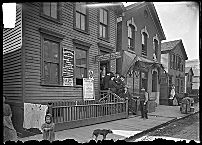
There has been a lot of change since the beginning of the settlement of the Italian immigrants till the present time. As the people coming from Italy didn't have much to offer they were given low paid jobs and they had to live in slummy places. The roads and the houses were not very developed at that time.
                           http://www.encyclopedia.chicagohistory.org/images/658_11593.jpg
But as the time progressed things got better and the housing, roads started to improve. Due to the demographic shifts as more people started to live in the city area rather than the rural parts of the city the roads and housing got better. Also economic change is another cause of this change, as thee Italians got better jobs and started to earn more they could afford better housing. The houses which are seen today are a lot developed than the previous ones.


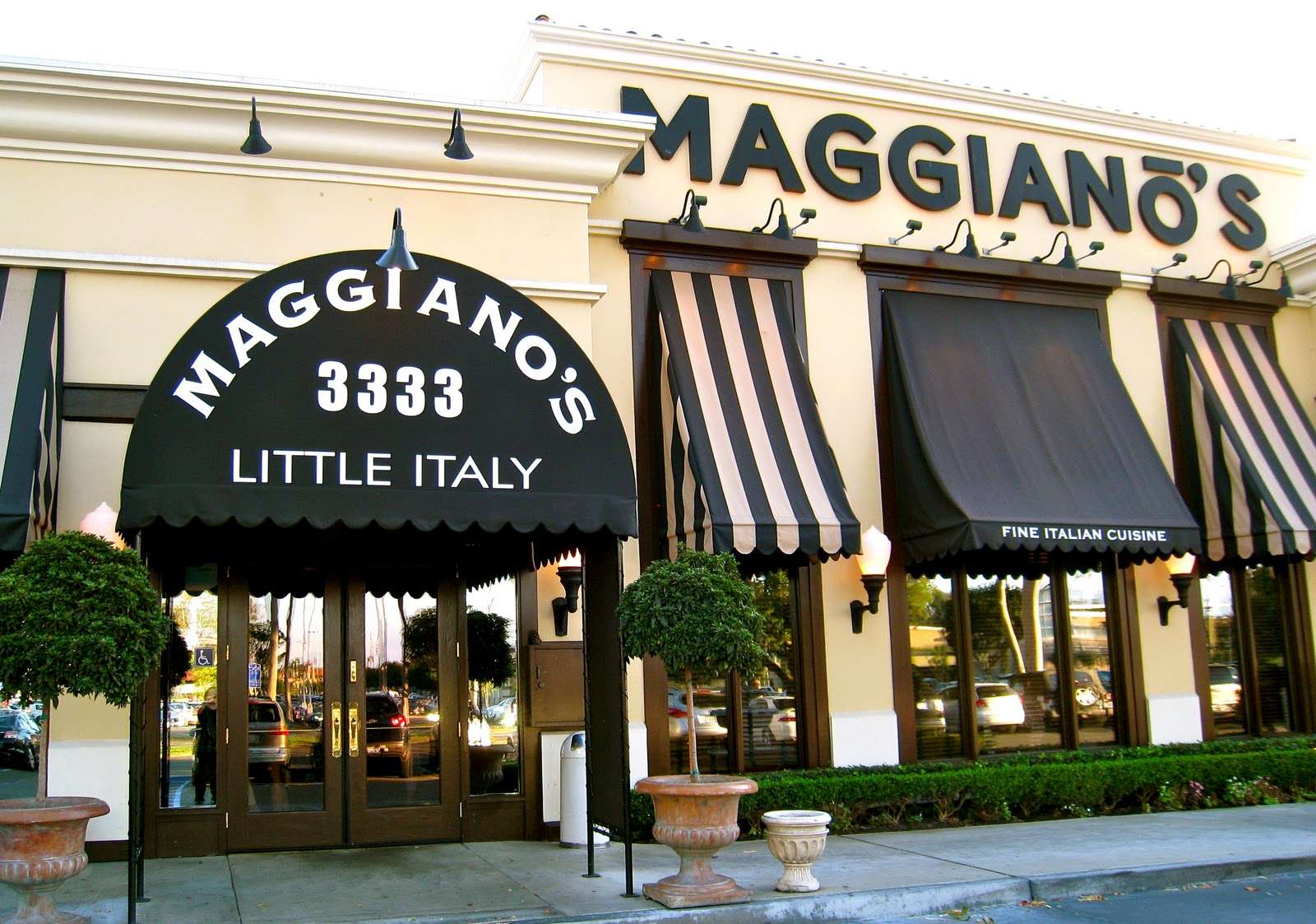
Little Italy is famous for its Italian restaurants. Although the early restaurants are not still there but their heritage continues as there are still many Italian restaurants in the area.

Italian food
                       http://globerove.com/wp-content/uploads/2010/03/Maggianos-Little-Italy.jpg
                       http://images.chicagotraveler.com/images/general-chicago/18-2-freancesca.jpg

Besides food there are some other landmarks which are famous in Little Italy. The National Italian American Sports Hall of Fame is one of them. The Roman Catholic church is also a very famous landmark.


National Italian American Sports Hall of Fame
                   http://www.ourladyofpompei-stpeters.org/images_main/mainindeximage.gif

There are some very famous statues which are a symbol of Little Italy. Christopher Columbus statue and Joe DiMaggio statue are probably the most famous ones. Joe DiMaggio was a famous American Major League Baseball player. He was an Italian descendant. He was an outstanding player winning 3 MVP awards and an all star in each of his 13 seasons with the New York Yankees. At the time of his retirement he ranked 5th in all time home runs. He was included in the baseball hall of fames in 1955 and was voted the sport's greatest living player in the year 1969. So he is a very famous Italian descendant and that is why there is a statue of him in Little Italy.

http://images.chicagotraveler.com/images/general-chicago/18-1-chris.jpg


Joseph Paul DiMaggio Statue

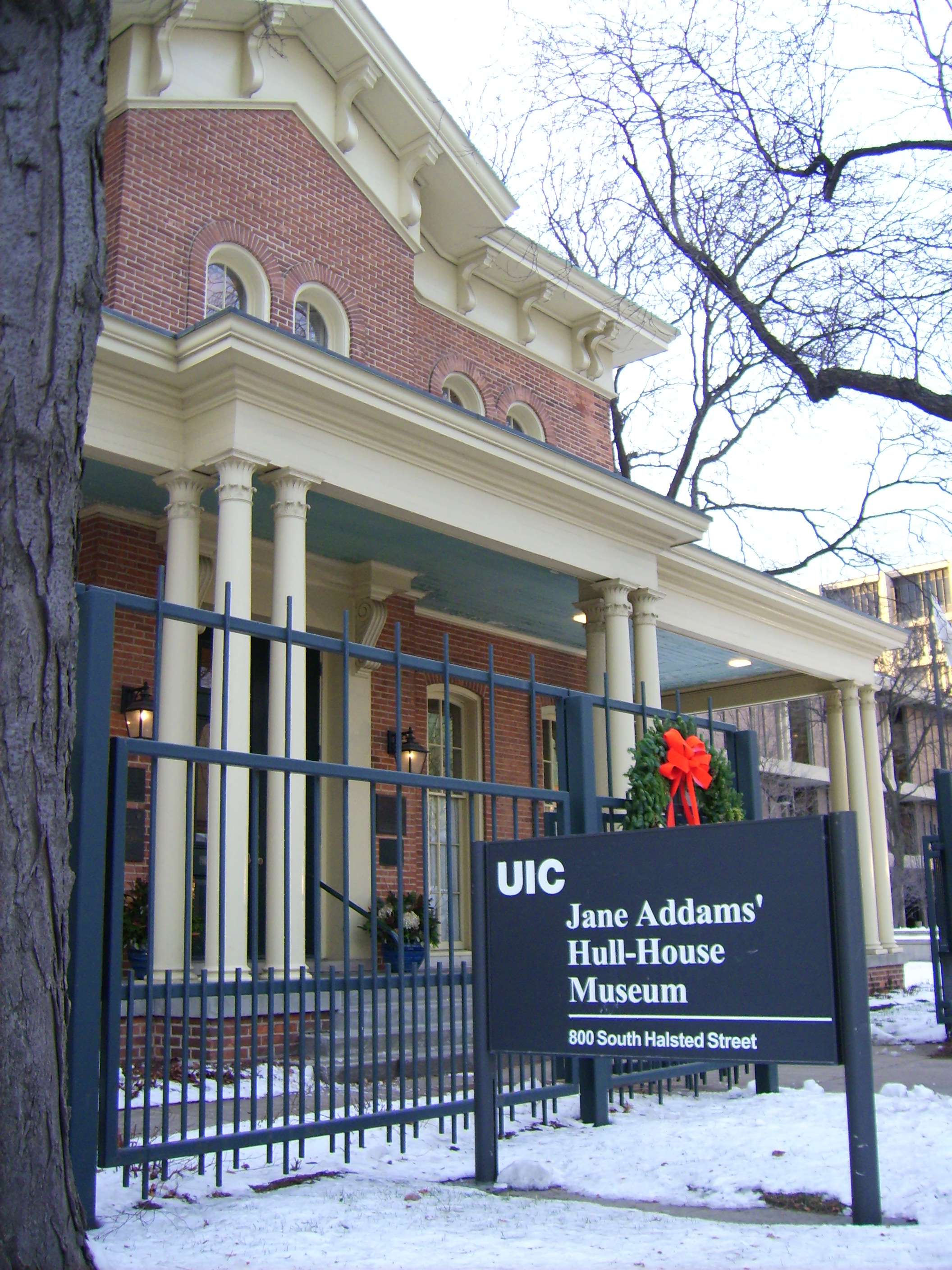
The most famous of the places is probably the Hull House Museum. It was a settlement house founded in 1889. It opened doors for the European immigrants and by 1911 it expanded to about 13 buildings. In 1912 The Hull House Complex was completed with the addition of a summer camp. From then on it had been continuously changing according to the demand of the situation and it was the pioneer for the other settlement houses built all over the country for immigrants. In 1965 it was designated as a National Historic Landmark and in 1974 it was designated as a Chicago Landmark. The Hull House operations ceased in 2012 but it remains as a museum now.


Jane Addams was a sociologist, social worker and worked for world's peace as she tried her heart and soul to remove the sufferings of women. She became a pioneer of social works and fought for women's rights which made her a role model for the middle class women. Her unending efforts earned her the Nobel Peace Prize in 1931 as she became the first American woman to win thee prize. In 1889 Addams and her friend founded the Hull House, a settlement house which became a very important part of the neighborhood as it was the center of all social, cultural and other managements.

References:
http://en.wikipedia.org/wiki/Hull_House
http://www.encyclopedia.chicagohistory.org/pages/658.html
http://www.chicagotraveler.com/neighborhoods/little-italy-feature.htm

Tuesday, February 3, 2015

Bridgeport!


Bridgeport is a neighborhood located in the south side of Chicago. It is one of the 77 community areas of the city. Bridgeport is a very diverse and ethnic neighborhood. It is not just one single urban village it's a collection of various cultures and various people. Bridgeport was the home of five Chicago mayors which shows the political influence of the neighborhood. It is famous for being the historical center of some political parties. Going around the neighborhood still gives that political outlook.

Bridgeport has a long history. The construction of Illinois Michigan Canal marks the beginnig of Bridgeport. Much of the neighborhood was initially filled with Irish-American. In the 1830s a large number of immigrants from Ireland started settling in the neighborhood. The place was known as Hardscrabble at first but as it was close to the bridge across the Chicago River its name ultimately became Bridgeport.


The Irish were Catholics and built a lot of churches in the neighborhood. There are still a lot of churches.


We got to see a couple of the churches
Besides the churches there was a Buddhist temple as well and we got to get inside it.


The view inside the temple

The Irish built a lot of schools and parishes for the welfare of the general people. There are still some schools and parishes in the neighborhood.


When the Irish came and started settling here they had to do low wage jobs and a lot of manual labor. They played a big role in the building of the Illinois Michigan Canal. But now the main way of income for the people have become car workshops.


Chicago city was built on a low land but when the roads were made high some of the houses had doors which were under the road. Some of these houses are still seen in Bridgeport.


Politics was a big part of the Irish culture. Due to their political knowledge they enjoyed a lot of things such as power and property. The politics is still seen in the neighborhood. Flyers for the election campaign are all over the place and we got to see a lot.


But as time passed by the Irish were replaced by other people such as the Chinese, Spanish, Mexicans. The change of culture can be seen quite well as now there are more Chinese schools, restaurants.


So although Bridgeport was filled with Irish at first, now there are almost no Irish living there. The Chinese and Mexicans are most of the habitants of Bridgeport now.

Wednesday, January 28, 2015

The Irish Immigration to Chicago

The Irish Immigration to Chicago started in the 19th Century. More precisely would be 1830s. Some Irish already lived in Chicago when it was incorporated as a city in 1837. Immigrant numbers grew in the early 1840s. The Great Famine (1845-1849) of Ireland caused a lot of people to leave the country and that is when the number of immigrants coming to Chicago increased the most. The Irish immigrants first settled in Bridgeporton the South Side or Kilglubbin on the North of Chicago.


By 1850 the Irish immigrants in Chicago accounted for about one-fifth of city’s population. The number of immigrants continued to increase till the end of the century but their percentage was never as high as it was in 1850. The vast majority of the immigrants were unskilled and they had to do poorly paid jobs. Although they did very unskilled jobs their contribution to the development of Chicago cannot be neglected.


Since the immigrants were unskilled they had to do a lot of manual labor. Much of the work on the Illinois and Michigan Canal between 1837 and 1848 was done by hand and most labors were the Irish immigrants. Hundreds of poor Irish men took up this low-wage work. They were isolated even in the construction site due to their foreignness and poverty.


Other contributions of the Irish included the meatpacking industry, police and domestics. The Irish and Germans were the skilled “butcher aristocracy” who were the heart of the AMC meat company. After 1856 the police department hired foreign-born recruits, especially unskilled English-speaking Irish immigrants. By 1870, households employed domestic workers, who accounted for 60 percent of the city’s wage earning women.


Unlike other ethnic groups which came to Chicago and lived in small concentrated areas, the Irish did not or maybe could not due to their growth. They resided in various parts of the city and had strong presence in Chicago’s south side. The Irish settled in large numbers in places such as Chatham, East Woodland, Avalon Park, Hyde Park, and many others.


Gradually as the time passed by the Irish immigrants started to improve their condition. They left their old neighborhoods in the central parts of the city and moved to better ones in outlying areas. After World War II the increased prosperity of the Irish was evident who left the city for the suburbs. Despite being separated the Irish people came together due to their religious and ethnic identities.
A handful of Irish along with Germans laid the foundation of Catholic Church in the city. With the increase of the Irish and German Catholic newcomers in the following decades the Catholic Church grew by leaps and bounds. Due to the arrival of more people of different countries the Catholic population became far more diverse. Because of their numbers, early arrival, and ability to speak English, the Irish held the dominant role in Catholic Church in Chicago for decades.

The Chicago Irish were perhaps known best for their political skills. Although they weren’t a majority in the city the Irish enjoyed a distinct advantage due to their knowledge of English language and he British system of government. Politics and nationalism tended to be male-dominated activities but the Catholic Church with its extensive networks of parishes, schools, hospitals and charitable institutions affected and involved the lives of the Irish women and children.

                                         
                                                    Provident Hospital in Chicago
                       http://www.nlm.nih.gov/exhibition/aframsurgeons/images/meded8.jpg

The Irish have played a leading role in the cultural revival of music and dance in the city as well. In addition to supporting the Irish American Heritage Center in the Irving Park Community Area of Chicago and Gaelic Park in the Oak Forest, the Chicago Irish have preserved a sense of place and identity through their network and parishes. Although the number has decreased to a great extent now the Chicago Irish are still an influential ethnic group.

Wednesday, January 21, 2015

Inventions and Innovations of Chicago

Chicago has been named the city of the century and why not? After all the developments of this great city it deserved something like this. Invention is the creation of something new but what really matters for economic growth is innovation, the act through which the new inventions are successfully introduced. At first something has to be invented but over time it has to be modified to get the best value out of the invention. Chicago is famous for many inventions and also innovations.

The first known reference to the site of the current city of Chicago was “Checagou” since a wild garlic, called “chicagoua” grew abundantly in the area. The area was first inhabited by Native American s then the first permanent settler in Chicago arrived who was Jean Baptiste Point du Sable, an African and European descent. He is known as the “Founder of Chicago”

Chicago was incorporated as a city in 1837 and experienced rapid growth in the mid-nineteenth century to become the fastest growing city in the world for several decades. Due to the site of Chicago it became an important transportation hub between the eastern and western United States. Chicago’s first railway, Galena and Chicago Union Railroad, opened in 1848, which also opened the Illinois and Michigan Canal. The canal allowed ships and boats on the Great Lakes to connect to the Mississippi River.
                                                     
                                             Map of Illinois-Michigan Canal

The growing economy brought residents and immigrants from abroad and manufacturing, retail and finance sectors became dominant which influenced the American economy. The Chicago Board of Trade which was established in 1848 became the first ever standardized “exchange traded” forward contracts, which were called future contracts. This concept was first introduced here and this was one of the many firsts.

The Chicago River divided the city into three parts which made the “Chicagoans” to become leading innovators in bridge technology. The first bridge was constructed in 1832 but it was a fixed span so it had some problems. Later the engineers came up with the idea based on a seesaw principle which was an ideal solution to Chicago’s bridge problems. The Tower Bridge in London was built on the same principle and the seesaw principle became “Chicago style.”

In 1830s Augustine Taylor came up with the “balloon-frame” structure for buildings. Today most buildings are based on this same structure. Chicago is called the home of architectural giants and greats. The Home Insurance Building built in 1885 is considered the world’s first skyscraper standing 138 feet tall. Sears tower is currently the tallest building standing at 1451 feet.

                                                              First Skyscraper
                                    https://www.flickr.com/photos/drs2/2802847136/

Refrigeration was a critical innovation which transformed livestock business and changed meatpacking from a local business to a national business operating all around the year. The meatpacking business was really popular in Chicago and was the meatpacking center of the country, and acknowledged headquarters of the Industry.

Chicago firms were innovators in the emergence of the electronics industry and extension of electric power. Chicago’s urban transportation system introduced electric trolley cars and Essanay Studios, which made motion pictures in Chicago before the film industry moved to Hollywood.


The first McDonalds franchise, the first ferris wheel, first deep dish pizza, first vacuum cleaner, first electronic dishwasher, first softball game, the first open heart surgery and some other firsts were done in Chicago. The city is still developing and getting better and better.

                                                            This is how the city looks now
                  http://en.wikipedia.org/wiki/Chicago#mediaviewer/File:Chicago_sunrise_1.jpg