Tuesday, April 21, 2015

Bronzeville

Bronzeville is a neighbor hood located in the Douglas and Grand Boulevard community areas on the South side of the City of Chicago around our University, the Illinois Institute of Technology. Bronzeville was known as the "Black Metropolis" in the early 20th century due to to the significance of African-American urban history. Bronzeville is one of the largest neighborhoods in Chicago and although it has not developed much like the other neighbor hoods but it is reemerging and bound to bloom very soon.

https://www.cityofchicago.org/content/dam/city/depts/dcd/tif/district%20maps/Bronzeville.gif
Since the neighborhood is so large it is not possible to visit all the places in one day but we tried to visit as many places as possible. At first we went to see the Victory Monument located on 35th and King Drive. The Victory Monument designed by sculptor Leonard Crunelle was built to honor the Eighth Regiment of the Illinois National Guard, an African-American unit that served France during World War I. The monument features three bronze relief panels depicting life sized figures: A classically draped African-American female representing motherhood, another classically draped female figure wearing a helmet and on her left hand the names of the battles the African-American soldiers fought, the other one is a bare chested African-American soldier symbolizing the soldiers who fought for the country.

http://blog.nombach.com/wp-content/uploads/2014/04/masonrychicago004.jpg

After that we visited The Great Migration Statue located on 27th and King Drive. Alison Saar's bronze figured statue is known as the Great Migration Statue. The statue symbolizes the thousands of African Americans who migrated to Chicago in the early 20th century in the hope of freedom and opportunity. The traveler's hand is raised as to salute the new home and the suitcase on the other hand symbolizes the journey. Also the statue is facing the north which is the destination for the people.

https://cbschicago.files.wordpress.com/2012/11/bronzeville.jpg?w=420
We went to the Harold Washington Cultural Center after that. It is located in 4701 S. King Drive. Harold Washington was the 51st mayor and the first African-American mayor of Chicago. A fun fact is his birthday and my birthday is on the same day. April 15th. The Harold Washington Cultural Center's mission is to preserve and protect the rich, diverse culture, and history of African Americans. The Cultural Center hosts events like plays and skits, different fundraising events, parties and bands etc.
We came across the Chicago Defender Building located at 4445 S. King on our way back from Harold Washington Cultural Center. The Chicago Defender is a Chicago-based weekly newspaper founded in 1905 by an African American.
Also at 3624 S. King Drive is the Ida B. Wells-Barnett House. Ida B. Wells is known for being a pioneer in the civil rights movement. She was an African-American journalist, newspaper editor, suffragist and sociologist. She also documented the lynching in the United States which was a racial abuse against the blacks.

http://upload.wikimedia.org/wikipedia/commons/b/b8/Ida_B._Wells_Homes_highrise_2.jpg
The Bronzville Walk of Fame located at King Drive between 25th and 35th Streets is a very significant part of Bronzeville history. There are about 91 bronze plaques on the sidewalks, medians and crosswalks which commemorate more than 100 residents who made contribution to the African American community in Bronzeville. There are individuals such as jazz musician like Louis Armstrong, poet Gwendolyn Brooks,the first African American astronaut Robert H. Lawrence Jr.

https://blogger.googleusercontent.com/img/b/R29vZ2xl/AVvXsEhtNsOOhYYt0cWGoNvySpRJz6uz0JL4Ap4pzAirEYAk4g9erSRozipRVrj8XoB1pVUqzUz0oe0wEHqg0ROUQQr4gYM9Y5PPF4l4CI7FDLJ6KX8fFlOKuP-P_RttuXLjKCTiIVaLuGpo71wL/s1600/LI-sculp-BZV-320b%255B1%255D.jpg
Meyer's Hardware/Sunset Cafe located at 315 E. 35th St. is another great place to visit. Although from outside it's just a hardware store the rich history makes it so much more. The venue opened in the 1920's as the Sunset Cafe. It was a "black and tan" night club, one of the few integrated clubs. It once hosted performances by jazz legends such as Ella Fitzgerald, Louie Armstrong. When the hardware store was moved into the space in 1960 the incredible jazz legacy was uncovered.


http://www.chicagoarchitecture.org/wp-content/uploads/2014/11/Meyer-Hardware-From-Street.jpg
The Supreme Life Building on 3501 S. King Drive is a nice place to visit. The building served as the headquarters of the Supreme Life Insurance Company which was the first African-American owned insurance company in the northern United States. The company was built in the 1921 and it became a symbol of predominantly black Bronzeville neighborhood's economic success. The building is one of the nine buildings designated as part of the Black Metropolis-Bronzeville District.

https://blogger.googleusercontent.com/img/b/R29vZ2xl/AVvXsEjnXKlPed4iCmxE6ffLNivPuWCjG239VFZHhEcuv4ksFktDGcfTC_0QUmVV3IBBKS4ADmvCn4BVZAy6LoHo53Ek8mS8e3xn4YGSsjwBp0Xe7HrT7WNRC2wtfh_ppZcrL3-VfXEsHBUEMhI/s1600/Supreme_Life_Building.jpg
The other important and famous places in Bronzeville are: Eighth Regiment Armory, (3353 S. Giles) is on the National Register of Historic Places because it was the first armory in United States built for an African-American military regiment known as Fighting 8th. The Sutherland Hotel, (4659 S. Drexel) is famous as some of the famous jazz greats such as Dizzy Gillespie, Miles Davis, John Coltrane and Nancy Wilson stayed and performed in this hotel. Welcome Inn Manor (4563 S. Michigan) was built in 1893 is a famous bed and breakfast. It represents the early architectural style of Chicago.

https://s-media-cache-ak0.pinimg.com/736x/b9/e7/51/b9e7515de4169691d0a110782295efa0.jpg

Besides these there are a lot of Churches in Bronzeville. Like the Pilgrim Baptist Church (3301 S. Indiana) which was designed as a synagogue by Chicago architects Louis Sullivan and Dankmar Adler. The first congregation there was of Reform Judaism. Bright Star Church (735 E, 44th St.) is famous for it's community service activism. The Quinn Chapel Church, First Church of Deliverance, Ebenezer Missionary Baptist Church etc. are the other famous churches of the area. The Wabash YMCA located in 3763 S. Wabash is an important organization for the African-American community. It served as an important social center within the Black Metropolis area and provided housing, job training for the African immigrants.
 
Pilgrim Baptist Church
http://upload.wikimedia.org/wikipedia/commons/thumb/6/6e/Pilgrim_Baptist_HABS_ILL-1054.jpg/250px-Pilgrim_Baptist_HABS_ILL-1054.jpg
Wabash YMCA
https://blogger.googleusercontent.com/img/b/R29vZ2xl/AVvXsEg1StksRD44ofJN3h4mLlZmPQAiZQoEQrfjT8m0c5ttTbjfsLq2BUJZjWJzxHCzUYcn6lPonLXv7LocVSGc2YowjGJ6xv6UvbKMwV7Gdmbmrt3z8FDeWf9T6jLA8MG-1XiRubxjs3yiYgg/s1600/LI-archi-BZV-055b.jpg

The Mecca Flats were an apartment housing all African American residents. Mecca Flat Blues was inspired from this monumental apartment but now in place of that apartment stands the Crown Hall building of our University, Illinois Institute of Technology.

http://www.chicagosouthsidepiano.com/wp-content/uploads/2013/01/Mecca-Flats.png
References:

"About Bronzeville." - Chicago Neighborhoods. Web. 22 Apr. 2015. <http://www.choosechicago.com/neighborhoods-and-communities/bronzeville/>.

"Alison Saar's Monument to the Great Northern Migration." City of Chicago ::. Web. 22 Apr. 2015. <http://www.cityofchicago.org/city/en/depts/dca/supp_info/chicago_s_publicart-alisonsaarsmonumenttothegreatnorthernmigrati.html>.

"Chicago Jazz History Revealed at Meyers Ace Hardware - Chicago Patterns | Chicago Patterns." Chicago Patterns RSS. Web. 22 Apr. 2015. <http://chicagopatterns.com/chicago-jazz-history-revealed-at-meyers-ace-hardware/>.

"Harold Washington." Bio. A&E Television Networks, 2015. Web. 21 Apr. 2015.

"Harold Washington Cultural Center." Harold Washington Cultural Center. Web. 22 Apr. 2015. <http://www.broadwayinbronzeville.com/>.

"In Chicago's Bronzeville a New Wave of Resurgence Is Picking Up Steam." In Chicago's Bronzeville a New Wave of Resurgence Is Picking Up Steam. Web. 22 Apr. 2015. <http://www.chicagonow.com/chicago-advocate/2015/03/in-chicagos-bronzeville-a-new-wave-of-resurgence-is-picking-up-steam/>.

"Mecca Flat Blues." City of Chicago ::. Web. 22 Apr. 2015. <http://www.cityofchicago.org/city/en/depts/dca/supp_info/MeccaFlat.html>.

"Public Art in Chicago: Bronzeville Walk of Fame." Public Art in Chicago: Bronzeville Walk of Fame. Web. 22 Apr. 2015. <http://chicago-outdoor-sculptures.blogspot.com/2009/09/bronzeville-walk-of-fame.html>.

"Supreme Life Building." COC. Web. 22 Apr. 2015. <http://webapps1.cityofchicago.org/landmarksweb/web/landmarkdetails.htm?lanId=1431>.

"Wabash YMCA of Metro Chicago." Wabash YMCA of Metro Chicago. Web. 22 Apr. 2015. <http://www.ymcachicago.org/wabash>.


Wednesday, April 1, 2015

Pilsen

http://pilsenrenovation.weebly.com/uploads/1/5/0/5/15059904/525647.jpg?286
http://www.chicagonow.com/getting-real/files/2014/06/Pilsen.jpg

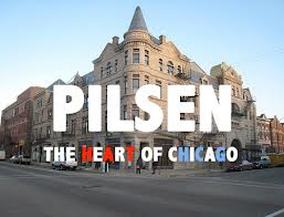
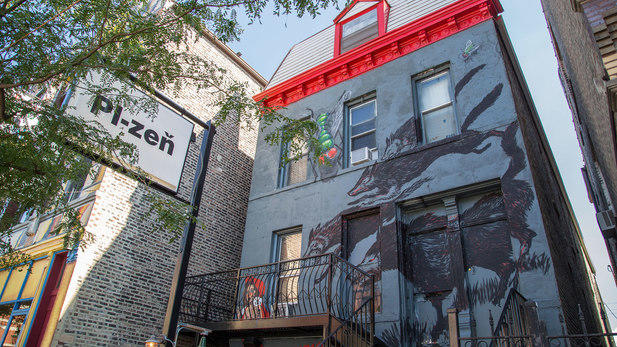
Pilsen is a neighborhood in the lower west side community area of Chicago. The Germans and Irish were among the first who settled in this neighborhood in the 1840's (Pilsen). The name owes to the next generation of Eastern immigrants, the Czechs. A restaurant owner named his restaurant "At the City of Plzen" and as people liked it they ended up calling the entire area Pilsen. Now Pilsen is a largely hispanic, predominantly Mexican neighborhood on the south side of Chicago bordered by the Chicago River north to 16th St (1600 S), and the Chicago River west to Damen Ave (2000 W) (Chicago Neighborhood). It is known for its proud Latino heritage, vivid outdoor murals and authentic Mexican cuisine.

Being in Pilsen and seeing all the murals, the different shops and restaurants gives a very different feeling. The murals are very creative and each of them kind of have some meanings. My friends and I started our excursion by first of all being late. We had to wait for the bus but instead we started walking towards 18th street from Roosevelt and finally when we got on the bus we were almost there but yeah we finally got off at Paulina and walked to the pink line. On our way there we saw parts of the neighborhood and it was not surprising to see that almost all the shops, restaurants etc were Mexican.

As we walked through from the train station towards West 19th street we came across different murals. The first one probably represents the ancient history of the neighborhood. The second one shows the diversity among the people as people from different country has a part to play. There are some gangs in that part of the area and they often mark their territory using murals or writing on the walls. I was able to safely view some of those without being attacked by any gang members.


The neighborhood is full of residential houses and shops. The residential houses are normally for family but we saw a student housing on 18th and Paulina. It was a pretty nice place with Dunkin Donuts in the first floor. We also went in to have some food there but that did not have any Mexican taste in it though.


We came across a school on the way to the National Museum of Mexican Art. Even the school had murals painted on it. We were a bit far away so we couldn't get a clear view of it but this shows the importance of murals as a form of public communication. These were probably painted by some students of the school.


Also there was a park named Harrison Park which has a huge area offering lots of sports including soccer, baseball, tennis, playground and even a swimming pool. The people coming to the museum probably go there after visiting the museum and we would have gone there too but we did not have enough time. Maybe next time we will. When we were passing by we saw a lot of people there playing soccer or baseball. I think there were students from a school that came on a field trip there on that day too as the museum was crowded too. 

http://mw2.google.com/mw-panoramio/photos/small/44865857.jpg
Finally we reached the museum and the art that we saw was mesmerizing. It had all the cultures and all the different aspects of Mexican culture, the past, the present, the future everything. It took us about an hour to go through it all and we were able to get some very good pictures of the arts inside the museum. 


After our tour of the museum we got pretty tired and hungry and being in Pilsen surrounded by all those Mexican cuisines was probably a very good thing. All the Mexican restaurants have so many delicious foods and some of them cater food as well and not only to people living very near but also to people living a bit far away. We went to Sabas Vega on 1808 S. Ashland to have lunch and I'm glad that we did because the food there was so delicious. Although the restaurant was not very big and there were only two people managing it the food was so good. We were offered free chips and the sauce was really good. I ordered a Tostadas while my friends ordered Burrito and Torta. All of these were too delicious but we could not eat much as we were full. But the next time we go we will definitely go in with an empty stomach. 


As I roamed through the neighborhood all I saw was Mexicans and Mexican restaurants, shops etc although it was founded by Czechs. This is a good example of the diversity and change of community with the change of time. Since the immigration of the Mexicans they have adapted quite well with the culture and traditions of the US. This shows the diversity of Chicago as it is another neighborhood full of colors, cultures and traditions like most of the other neighborhoods.

References:

"Pilsen." Pilsen. Web. 2 Apr. 2015. <http://www.encyclopedia.chicagohistory.org/pages/2477.html>.
"Chicago/Pilsen." Pilsen Travel Guide. Web. 2 Apr. 2015. <http://wikitravel.org/en/Chicago/Pilsen>.

"Pilsen." Chicago Real Estate. Web. 2 Apr. 2015. <http://www.chicagoneighborhoods.cc/neighborhoods/pilsen.html>.

Tuesday, March 24, 2015

Assimilation, Pluralism and Multiculturalism

Immigration is the action of coming to live permanently in a country. Immigration started a long time ago. Immigration to the United States started in the early-mid 1800's and then in the late 1800' and early 1900's. First the Europeans started to migrate to the United States, following them people from other countries started to come to the United States as well because there were a lot of employment opportunities in the country. Right now there are bout 38.5 million immigrants living in the United States which means one out of every eight Americans is an immigrant. In the state of Illinois there are about 1.74 million immigrants of which 588,000 live in Chicago, 33.8% of the state total (US Census Bureau 2009 American Community Survey, Table B05002).

Table Showing Immigrants
http://www.chicagoloopster.com/wordpress/wp-content/uploads/2011/01/immigration_chart1.jpg

The first immigrants that arrived to the US were the French. Following the 1848 revolutions that swept through Europe the French immigrants were political refugees who left France (American Experience, n.d.). Following the French came the Scottish people in the 1850's. Scottish immigrants founded the Illinois Saint Andrew Society in 1845 to help Scottish immigrants adjust to the new environment (American Experience, n.d.). It was the first organization of this type founded in Chicago. Then Norwegians entered the America next to join the labor force where there were more opportunities than in their homeland. It was easy for them to get accustomed here because they knew English. They had a protestant work ethic which is work hard and be successful. They maintained their individuality, right to democracy. Norwegians helped establish Logan Square neighborhood, which now houses a large Latino population (American Experience, n.d.). These were the "old" immigrants and they moved to the west in the later times.

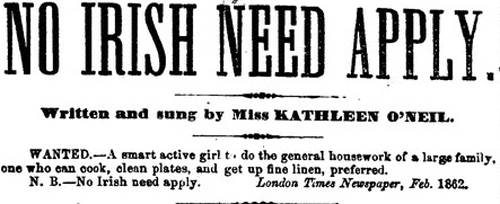
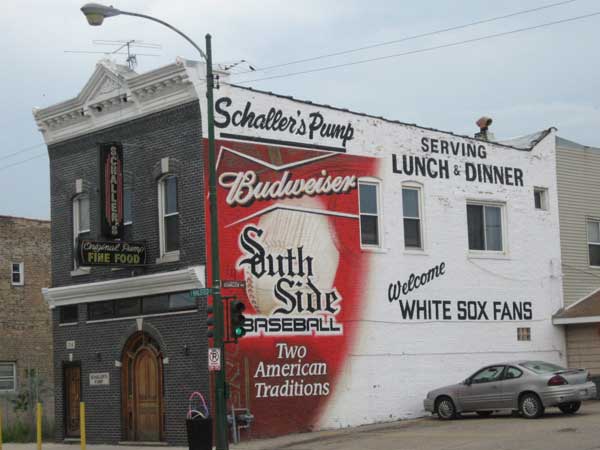
The "new" immigration started with the Irish. The Irish started to migrate since the 1830's they weren't a huge population until the 1860's because that is the time when they really started to come in and their population doubled from the 1830's (Irish, n.d.). Due to their dark skin they were discriminated a lot. But the Irish immigrants were a huge part of the labor force which worked in making the Illinois Michigan Canal (1836-1848). The Irish settled in a neighborhood called Canalport which was later known as Bridgeport and was the home to five 20th century Chicago mayors (American Experience, n.d.). The Irish were famous for drinking beer, consequently the oldest bar in Chicago is an Irish bar. At first the Irish were all separated but later they assimilated together to counter the discrimination towards them.

http://www.substancenews.net/assets/images2/1055932816.jpg
The Polish immigration to Chicago started from the 1850's and lasted till the early 1920's (Poles, n.d). Although there were a lot of Polish people coming to Chicago they did not really integrate as there were 5 different Polish neighborhoods in the city of Chicago. The Polish were the first among the immigrants who had the interest of owning properties. They bought lands or property instead of just renting and living there. The main Polish settlement was along the North Branch of the Chicago River. In 1867 the Polish community created its own Roman Catholic parish, St. Stanislaus Kostka, which was the first of about 60 parishes in the archdiocese (Poles, n.d.). The Polish people also started banking among the associations, they also established a burial society. As funerals were very costly the burial society would collect money and provide money to people for completing funerals. The Poles built orphanages, old age homes and a few Catholic Churches. But since they isolated themselves and had no political power or investment, they could not progress much and failed to have very high upper class. Nowadays the Archer Heights neighborhood maintains a strong Polish presence (American Experience, n.d.).

http://www.realestateprochicago.com/wp-content/uploads/2013/02/Polish-Avondales-Polish-Village-200x300.jpg
Oldest Bar in Chicago
http://www.angelfire.com/ex2/thenovakids/news/2006/schallers_pump.jpg

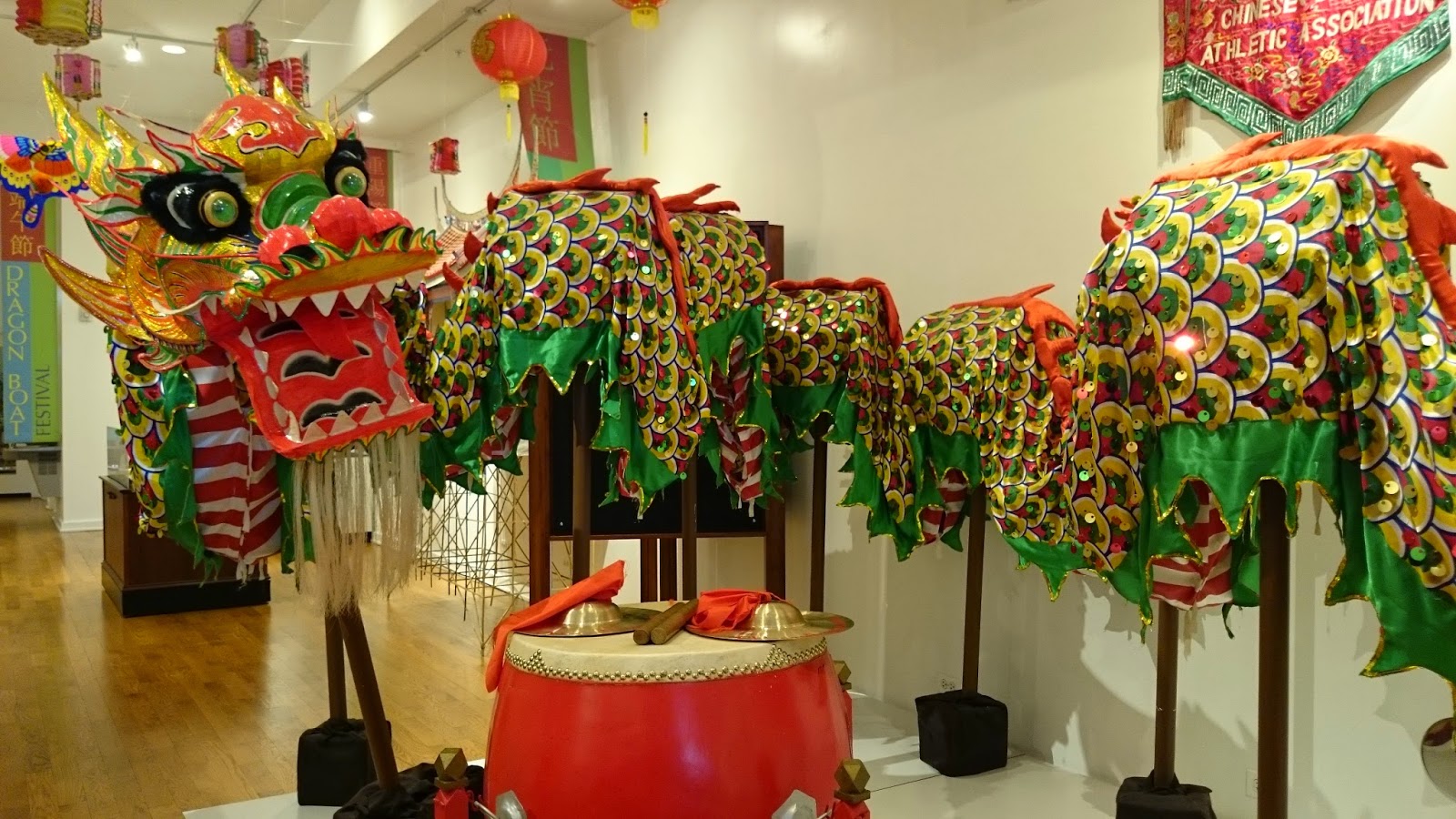
The first Chinese immigrants to Chicago arrived in the early 1870's (Chinese, n.d.). The Chinese first settled in California but after the construction of the railroad they started to migrate to Chicago, New York, and Boston. The population started to grow steadily and reached to about 2,353 in 1920 from 172 in 1880 (Chinese, n.d.). Due to the U.S. immigration policies and anti-Chinese attitude the immigrants from China were not welcomed in the U.S. There was a Chinese Exclusion Law in 1882, which made a lot of Chinese leave the country and there was much imbalance in the demography as there were merely 6% female of the total Chinese population in Chicago (Chinese, n.d.). The Chinese immigrants had a very rough time coming into a new country. Despite all the difficulties the Chinese in Chicago built a community in Chinatown and established some organizations for their support. After World War II the Chinese exclusion act ended and a lot more Chinese immigrants started to arrive in the U.S. The Chinese established a lot of family organizations.


Chinatown Gate, Chicago

Traditional Chinese Dragon

Italians began to come to Chicago in small numbers in the 1850's working as merchants, vendors, barbers etc and by 1880 there were about 1,357 Italians in the city (Italians, n.d.). The first thinking of the Italians was to make money and go home, "sojourner" they were called. They wanted to work outdoors not confined to mills and factories. They became construction workers or became fruit, vegetable vendors. They had a tough time competing with the Greeks as they were also fruit and vegetable vendors.  The Italians that came were mainly farmers and merchants and they did not stay long enough to gain any political success. As most of them left the remaining ones formed the largest ethnic group in the Near West Side neighborhoods by the 1920's (American Experience, n.d.). The area around Taylor Street is Chicago's Little Italy.


http://images.chicagotraveler.com/images/general-chicago/18-3-littleitaly.jpg

The formation of the Austrian-Hungarian Empire in 1867 sparked an exodus from that region and Czechs from Bohemia entered Chicago in the following decades (American Experience, n.d.). They settled in the Lower West neighborhood called Pilsen, the name originates from a Bohemian capital best known for Pilsner beer. The Czechs were the 2nd most literate immigrant group with about 98% literacy rate. Unlike other immigrant groups they collaborated and integrated as a result they became successful. Since they were educated they gained a lot of political power by representing about 80 public officials in 40 years. The Czechs built a lot of immigrant institutions like savings and loan associations, gymnastics societies, fraternal organizations which became established and some of them are still running (Czechs and Bohemians, n.d.).


http://media.timeout.com/images/100920059/617/347/image.jpg

Jews came to Chicago from virtually every country in Europe and Middle East, but especially from Germany and Eastern Europe. Chicago's first permanent Jewish settlers arrived in 1841 from Central Europe, largely from Germany (Jews, n.d.). The Jewish immigrants were separate from other people coming from their own country. The Jewish Irish or Polish or Italians were separate from the other immigrants from their country. The Jews were discriminated in their native countries and the only safe place they could find was the US. They settled in one of the poorest parts of the city, the Maxwell Street area on the Near Westside. They mainly benefited from the free education provided by the government. Education and entrepreneurship provided many Jews with the route out of Maxwell Street as some moved to the South Side; some moved into the North lakefront communities of Lake View, Uptown and Rogers Park; more headed northwest into Humboldt Park, Logan Square and Albany Park. The largest number moved west into the North Lawndale area, which became the largest Jewish community in the history of Chicago by 1930's (Jews, n.d.). 


http://www.danwymanbooks.com/images/GENE-1-40.jpg

Assimilation is a process in which formerly distinct and separate groups come to share a common culture and merge together and Pluralism, on the other hand, exists when groups maintain their individual identities (Assimilation and Pluralism, n.d.). Both Assmililation and pluralism are important for immigrants who come to a new place. Although there were many different immigrant groups arriving to Chicago not all immigrant groups assimilated or integrated. Some became more successful than others as a result of their experience, hard work and opportunities provided to them. The immigrants have a major impact in the city in various aspects. In 2005 Illinois launched the nation's first statewide effort to integrate immigrants, putting outreach workers in ethnic groups to help with citizenship applications and voter registration  (Immigrant Chicago, n.d.). Overall Chicago is an immigrant friendly city and if you are an immigrant looking for a place to settle I would highly recommend Chicago!  


http://www.wenphotos.com/flash/teresawilsonesession/Colorful-downtown-chicago-and-pilsen-engagement-session-with-murals-06.jpg

References:
Chicago's Immigrants Break Old Patterns. (2003, September 1). Retrieved March 23, 2015, from http://www.migrationpolicy.org/article/chicagos-immigrants-break-old-patterns

Chinese. (n.d.). Retrieved March 25, 2015, from http://www.encyclopedia.chicagohistory.org/pages/285.html

Czechs and Bohemians. (n.d.). Retrieved March 25, 2015, from http://www.encyclopedia.chicagohistory.org/pages/153.html

Immigrant Chicago: How immigration shaped a city. : ChicagoStories.org — Resources for journalists covering Chicago. (n.d.). Retrieved March 23, 2015, from http://chicagostories.org/immigrant-chicago/

Irish. (n.d.). Retrieved March 23, 2015, from http://www.encyclopedia.chicagohistory.org/pages/652.html

Jews. (n.d.). Retrieved March 25, 2015, from http://www.encyclopedia.chicagohistory.org/pages/671.html

Poles. (n.d.). Retrieved March 25, 2015, from http://www.encyclopedia.chicagohistory.org/pages/982.html

US Census Bureau 2009 American Community Survey, Table B05002. Place of Birth by Citizenship Status – Universe: Total Population